Written by Nel Restoration | Published on June 2025
Ceiling water damage signs usually appear 1 to 3 weeks after a leak begins, giving you a narrow window to act before mold grows or structural materials fail. The most common early signs are yellow or brown stains, bubbling paint, and soft spots in drywall. This article walks you through every warning sign, what causes them, and when to call a professional in Goldsboro, Raleigh, Wilson, Kinston, or anywhere across the region we serve.
Recognize the Most Common Ceiling Water Damage Signs
Not all ceiling damage looks the same. The signs depend on the source of the leak, how long it has been active, and the materials in your ceiling. Here are the key warning signs you should never ignore.
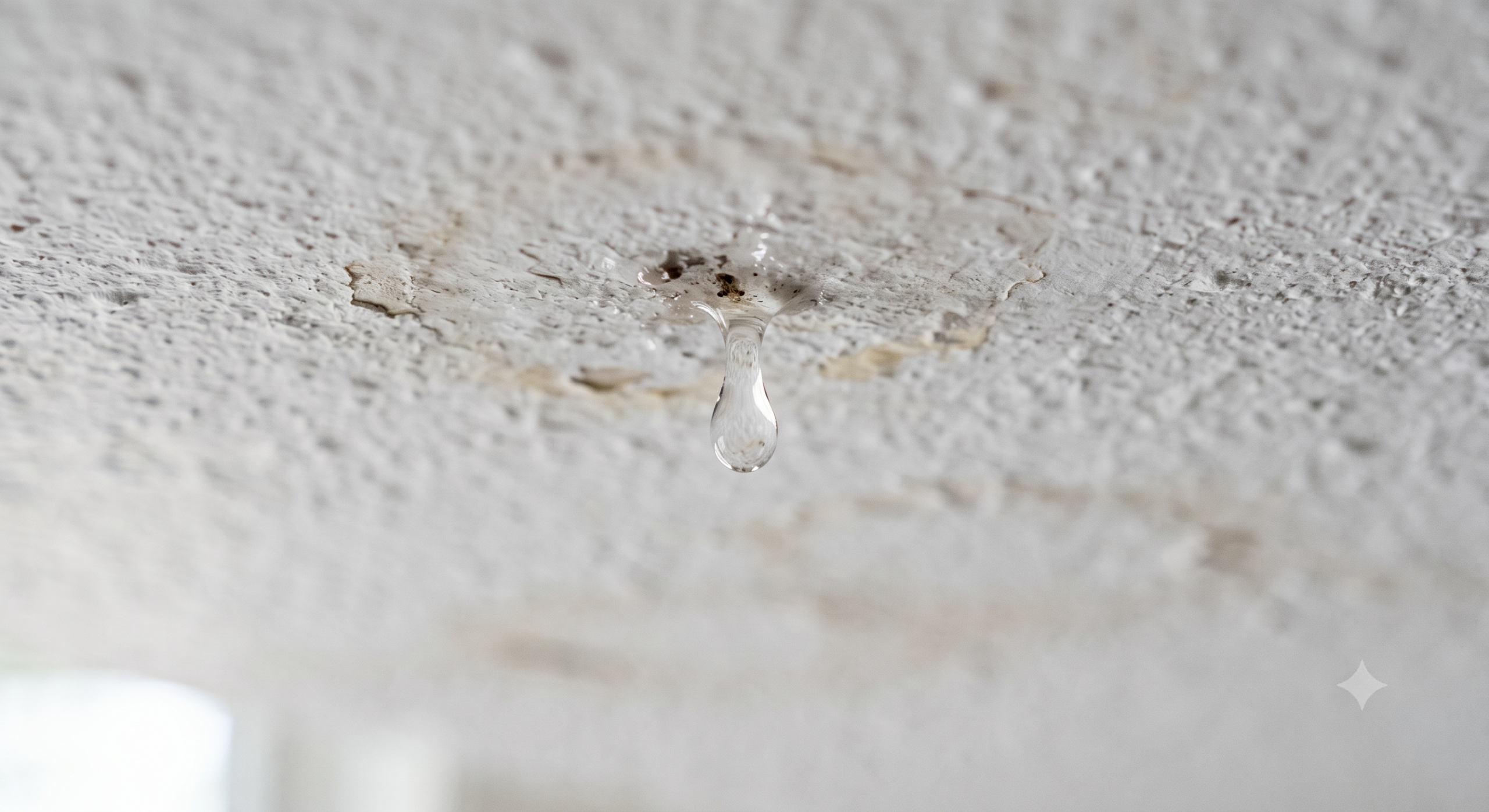
- Yellow or brown stains: These ring-shaped discolorations form as water dries and leaves behind minerals and dirt. They often expand over time if the leak continues.
- Bubbling or peeling paint: When water gets trapped beneath paint or drywall compound, it breaks the bond and causes the surface to bubble, crack, or peel away.
- Sagging or warped drywall: This is a serious sign. Drywall absorbs water quickly and can sag several inches within days. A bulging ceiling can collapse if ignored.
- Musty odors: A persistent musty smell without a visible stain often means mold is already growing inside the ceiling cavity.
- Visible mold growth: Black, green, or gray spots on your ceiling surface mean moisture has been present long enough for mold to colonize, usually 24 to 48 hours or more.
- Dripping water or wet spots: Active dripping is the most urgent sign. The visible drip point is rarely directly above the source, so the leak may be traveling along framing or pipes.
If you notice two or more of these signs together, the damage is likely more extensive than the surface shows. Contact a restoration professional right away rather than waiting to see if it gets worse.
Understand What Causes Ceiling Water Damage in North Carolina Homes
North Carolina’s climate creates specific risks for homeowners in areas like Smithfield, Clayton, Selma, and La Grange. Hot, humid summers put extra stress on roofing materials, HVAC systems, and plumbing. Understanding the cause helps you find the right fix.
| Cause | Where It Typically Appears | Urgency Level |
|---|---|---|
| Roof leak after storm | Top-floor ceilings, corners near eaves | High |
| Plumbing pipe leak above ceiling | Any floor below a bathroom or kitchen | High |
| HVAC condensation overflow | Near air handler units or vents | Medium |
| Ice dams (rare in NC but possible) | Exterior walls and attic areas | Medium |
| Upstairs bathroom overflow | Directly below bathrooms | Very High |
| Failed caulking around fixtures | Beneath tubs, showers, and sinks | Medium |
In towns like Fremont, Eureka, and Seven Springs, older homes built in the 1970s and 1980s often have galvanized steel pipes that corrode over time. These pipes can develop pinhole leaks that go unnoticed for months before ceiling stains appear.
Roof damage after hurricanes and tropical storms is also a major concern across Wayne, Johnston, and Lenoir counties. Even a small breach in flashing or shingles can allow gallons of water into your attic during a single storm event.
Compare Early Stage vs. Advanced Ceiling Water Damage
Catching ceiling water damage signs early makes a huge difference in repair cost and repair time. The table below shows how the damage and cost escalate as the problem is left untreated.
| Stage | Visible Signs | Estimated Repair Cost | Mold Risk |
|---|---|---|---|
| Early (0-72 hours) | Small stain, slight discoloration | $200 to $500 | Low |
| Moderate (3-7 days) | Bubbling paint, larger stain, soft drywall | $500 to $1,500 | Medium |
| Severe (1-3 weeks) | Sagging, mold spots, odor | $1,500 to $4,000+ | High |
| Critical (1+ months) | Structural damage, widespread mold | $4,000 to $15,000+ | Very High |
These cost ranges reflect typical jobs in the Goldsboro area and surrounding communities. Larger homes or multi-story properties may see higher costs due to access challenges and the volume of affected materials.
Nel Restoration responds to water damage calls quickly across the region, helping homeowners document damage at the earliest stage so that insurance claims are easier to file and repair costs stay manageable.
Inspect These Specific Areas of Your Ceiling First
If you suspect a leak but cannot find an obvious stain, start your inspection in the places where ceiling water damage most commonly hides. A systematic check saves time and helps you find problems before they grow.
- Around light fixtures and ceiling fans: Water follows electrical wiring and often pools around fixtures. Look for rust rings or yellowing around the base of any ceiling-mounted fixture.
- Along interior walls near bathrooms: Plumbing supply and drain lines run inside interior walls. Water from a slow leak will travel horizontally along framing before dripping through the drywall below.
- At the edges where walls meet the ceiling: This junction is often the first place you will see a stain appear because water accumulates in corners before spreading inward.
- Beneath attic access hatches: Improper attic insulation or ventilation can cause condensation that drips back down through the hatch frame. Check the perimeter of the hatch for staining.
- Near HVAC supply vents: A clogged condensate drain line in your air handler can back up and overflow, causing water to travel through ductwork and drip from ceiling vents.
- In basements and crawl spaces below living areas: If your home in Pikeville, Mount Olive, or Kenly has a basement, check the overhead joists for moisture, staining, or mold that reflects a leak from above.
Use a flashlight to check each area carefully. Press lightly on the drywall surface. If it feels soft or spongy, water has already saturated the material and drywall replacement will likely be needed.
Know When a Ceiling Water Stain Is an Emergency
Some ceiling water damage signs are urgent enough to require an immediate call to a restoration company. Do not wait until business hours if you notice any of the following conditions.
- The ceiling is visibly bulging downward or bowing in the center.
- Water is actively dripping or pooling on the floor below.
- You can hear water running inside the ceiling cavity but cannot find the source.
- The stain appeared suddenly after a storm and is growing within hours.
- You see black mold growth larger than 10 square inches.
- A ceiling section has already partially collapsed or cracked open.
A sagging ceiling filled with water can weigh hundreds of pounds. If the drywall gives way, it can cause injury and significantly increase cleanup costs. Turn off the water supply to your home if you suspect a pipe leak, and call Nel Restoration right away.
Our team serves Princeton, Wilson, Walnut Creek, and all surrounding communities with 24-hour emergency response. The faster you call, the more we can limit the damage.
Take These Steps While Waiting for a Restoration Team
Before the restoration crew arrives, there are safe and practical steps you can take to reduce further damage. Do not attempt to tear out drywall or open the ceiling yourself unless you are sure the source of water has been stopped.
- Turn off the water main if the leak is plumbing-related. Your shutoff is usually near the meter or in a utility room.
- Move furniture, electronics, and valuables out of the affected area to prevent secondary damage.
- Place buckets or towels beneath active drips to contain water on the floor.
- Take photos and short videos of all visible ceiling water damage signs. Date-stamped photos are valuable for insurance claims.
- Do not use ceiling light fixtures or fans in the damaged area. Water and electricity are a dangerous combination.
- Open windows in the affected room if weather allows. Ventilation slows mold growth while you wait for help.
These steps do not replace professional drying and remediation. Hidden moisture inside walls, insulation, and subfloor materials requires industrial equipment to fully extract. Leaving hidden moisture behind leads to mold growth within 24 to 48 hours.
FAQs on Ceiling Water Damage Signs
What does a water stain on the ceiling actually mean?
A water stain on your ceiling means that water has reached the drywall surface at some point, either from an active leak or a past one. Even old stains should be investigated because the leak source may still be present. A professional inspection can confirm whether the damage is ongoing or resolved.
Can a ceiling water stain go away on its own?
The stain itself will not disappear on its own. Once water dries, it leaves behind mineral deposits and dirt that permanently discolor the surface. The stain can be painted over, but only after the moisture source is fixed and the area is fully dry, which can take 3 to 5 days with proper drying equipment.
How do I know if my ceiling has mold after a water leak?
Visible mold looks like fuzzy or powdery spots that are black, green, or gray. A musty odor without visible growth often indicates mold inside the ceiling cavity. If you suspect mold, do not disturb the surface. Call a restoration professional for a proper assessment and safe remediation.
Is ceiling water damage covered by homeowners insurance?
Most homeowners insurance policies cover sudden and accidental water damage, such as a burst pipe or storm-related roof leak. Gradual leaks caused by neglect are typically not covered. Document all ceiling water damage signs as soon as you find them and contact your insurer promptly to start your claim.
How long does it take to dry out a water-damaged ceiling?
With professional drying equipment like industrial air movers and dehumidifiers, most ceilings dry within 3 to 5 days. Without equipment, the process can take 2 to 4 weeks, significantly increasing the risk of mold growth. Nel Restoration uses moisture meters throughout the drying process to confirm the ceiling is fully dry before any repairs begin.
Should I poke a hole in a bulging ceiling to release the water?
Professionals sometimes do this in a controlled way to relieve pressure and direct the water into a container, but it carries real risks including electrical hazards and sudden collapse of a larger section. Unless you are confident there are no electrical lines in the area, it is safer to call a restoration professional to handle it.
Wrap Up and Next Steps
Ceiling water damage signs like stains, bubbling paint, sagging drywall, and musty odors are your home’s way of telling you something is wrong above. Acting within the first 72 hours dramatically reduces repair costs and prevents mold from taking hold.
Nel Restoration is based in Goldsboro and serves homeowners across Raleigh, Walnut Creek, Pikeville, Fremont, Princeton, Mount Olive, La Grange, Eureka, Seven Springs, Smithfield, Selma, Wilson, Kinston, Clayton, and Kenly. If you have spotted any of the warning signs in this article, do not wait. Call us now at (818) 389-9002 to schedule an inspection or request emergency service. Our team is ready to help you protect your home before the damage spreads.